English
 Español
A cake board is easy to overlook when everything goes to plan. It sits under the cake, stays out of sight, and rarely gets much attention. But when a refrigerated cake needs to be moved, boxed, or delivered, that board has a real job to do. If it absorbs too much moisture, it can soften or bend at the very moment the cake needs steady support.
Cold storage can expose disposable cake boards to moisture in several ways. Condensation may form when a cold cake meets warmer air. Cream, fruit, mousse, and other fillings can leave moisture around the base. Paper-based boards may also take up moisture from humid air, even when they do not look wet.
For bakeries, a weak board can damage an otherwise good cake. It may bend during lifting, warp inside the box, or show stains. Buyers need a board that suits the cake, storage time, and handling conditions.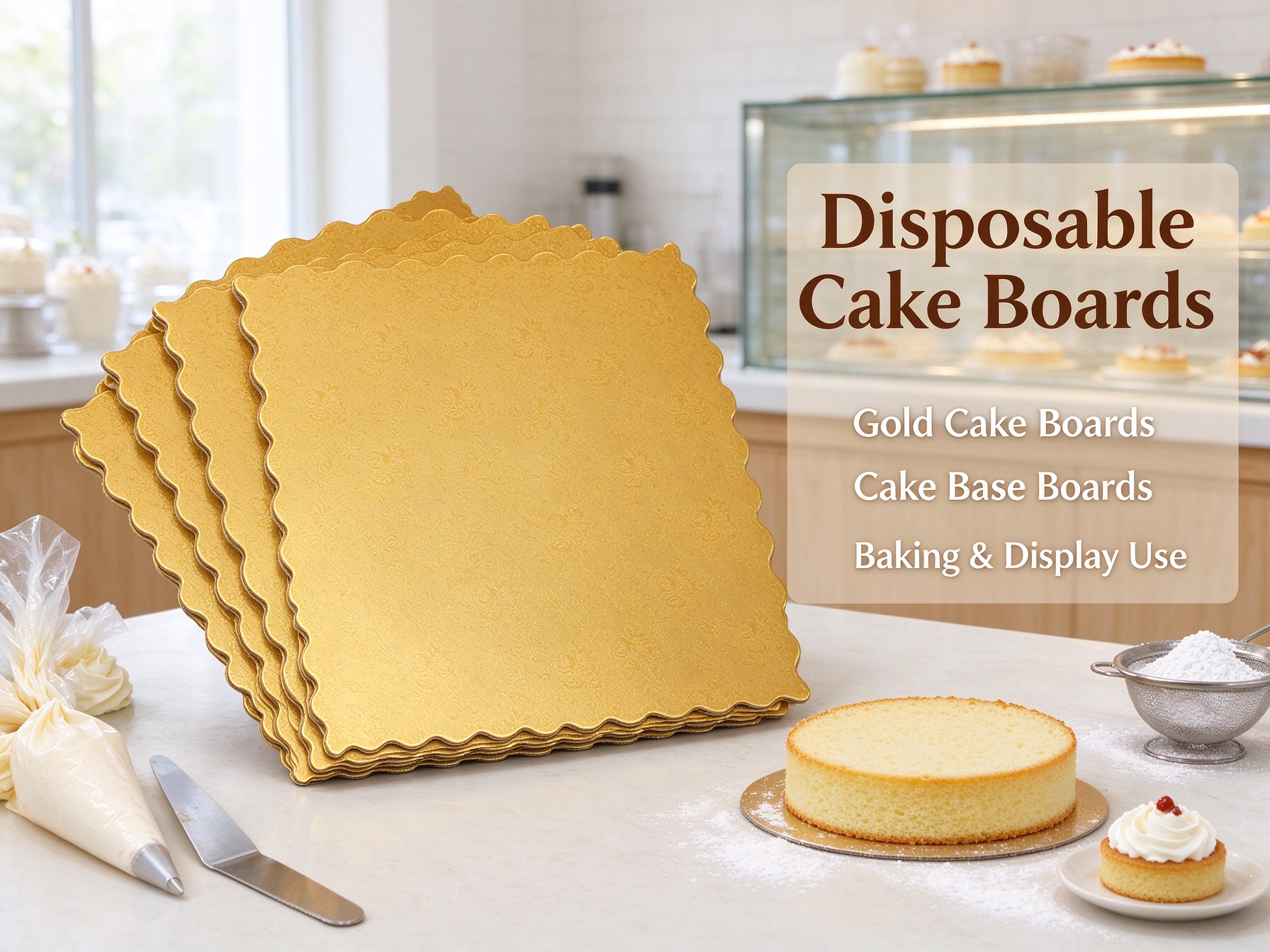
How Moisture Reaches Cake Boards in Cold Storage
Condensation is one of the most common causes of moisture exposure. When staff take a cake out of a refrigerator and place it in warmer air, water can form on the box, the frosting, or nearby surfaces. If that water runs down to the base, the board may stay damp during packing or delivery.
The cake itself can also supply moisture. Cream, cut fruit, custard, mousse, and syrup-soaked sponge may leave liquid where the cake meets the board, especially during long storage.
Humidity creates a less obvious risk. Paper products can absorb moisture from the air without developing visible droplets. The cut edges of a board may be more exposed than its smooth top, so a coated surface does not necessarily protect the whole product.
Exposure depends on the cake and storage routine. A cake chilled for an hour faces different conditions from a heavy cream cake stored overnight and then taken into warm air. Choose a board for the conditions it will actually face.
What Can Happen When a Board Absorbs Moisture?
It may bend under the cake
Paper fibers can lose some stiffness when they absorb water. If the board softens, it may sag under a heavy cake. This can be a problem with multi-layer cakes, cheesecakes, and cakes with dense fillings. During lifting, even a small amount of bending can make the cake shift or crack.
A soft board is harder to handle. It may flex as staff slide the cake into a box or lift it from a work surface, putting frosting and decorations at risk.
It may lose its flat shape
Moisture rarely spreads evenly through a paper-based board. One area may absorb more water than another, causing the board to curl or warp. The cake can then sit at an angle, or the board may no longer fit neatly inside its box.
Staff should inspect the board after refrigeration, not just before use.
It may look worn or stained
Fruit juice, cream, and other liquids can leave marks on a board. A coating may also become damaged during cutting, packing, or transport. Once the underlying paper is exposed, moisture can enter through that spot even if the rest of the surface remains protected.
On multilayer boards, poor bonding can cause layers to separate. Staff should check the underside, corners, and cut edges as well as the top.
Match the Board to the Cake
Cake types differ in weight, moisture level, and time in storage. The board should suit all three, not just the cake's diameter.
| Cake application | Likely moisture concern | What to check |
|---|---|---|
| Fresh cream cake | Damp frosting and condensation | Surface protection and edges |
| Fruit-topped cake | Juice from cut fruit | Resistance to direct liquid contact |
| Mousse cake | Long periods in the refrigerator | Flatness after storage |
| Multi-layer cake | Greater weight and pressure | Stiffness and load capacity |
| Frozen cake | Condensation during thawing | Performance through temperature changes |
| Cheesecake | Moist filling and a dense base | Support strength and moisture resistance |
| Takeaway cake | Handling and changing temperatures | Stability during packing and delivery |
Use the table as a starting point. A small fruit tart puts less strain on a board than a tall cake, and storage time also matters. For heavy cakes or long storage, ask for test results or try the board with a representative load.
Which Materials and Treatments Help?
Paperboard and corrugated board
Paperboard is popular because it is light, easy to cut, and available in different thicknesses. Corrugated board adds a fluted layer between two outer sheets. That structure can increase stiffness without adding much weight.
Neither option is automatically moisture-resistant. Untreated paper can absorb water, especially along exposed edges. Material grade and construction matter; extra thickness alone will not stop moisture getting in.
Laminated cake boards
A laminate adds a layer over the paper-based surface. It can slow liquid penetration and make the board easier to wipe during handling. This can be useful when cakes contain moist frosting or when condensation is likely.
Lamination does not guarantee waterproofing. Cuts, scratches, and damaged corners may expose the paper, and results depend on the laminate and how it is applied. Ask the supplier what conditions the board has been tested for.
Coated paperboard
A coating can improve moisture resistance, but not every coating handles long contact with liquid. Application gaps or damaged areas can leave the paper exposed.
The coating must suit the food-contact application as well. A treatment should not be chosen just because it resists water; the supplier should be able to provide relevant material and compliance information.
Multilayer boards
Multilayer boards can combine support and surface protection. Their performance still depends on bonding, edge finishing, and the materials used.
| Construction | Possible benefit | Point to check |
|---|---|---|
| Untreated paperboard | Light and easy to process | Water absorption and stiffness |
| Corrugated board | Support with relatively low weight | Exposed edges and liners |
| Laminated paperboard | Slows liquid entry through the surface | Cuts, scratches, and corners |
| Coated paperboard | Adds surface protection | Coating consistency and exposure time |
| Multilayer board | Can combine support and protection | Bonding and edge construction |
No single construction suits every cake. Balance support, moisture exposure, food-contact suitability, and cost.
How to Check Moisture Resistance Before Ordering
A board can look firm when dry and soften in the refrigerator. Check performance before placing a large order.
Check water absorption. A suitable test measures water uptake under stated conditions. This helps compare samples, but it does not prove the board suits every cake.
Check shape after storage. Keep samples under conditions similar to the intended use, then look for curling, swelling, or a loss of flatness. Record the temperature and exposure time so another sample can be tested in the same way.
Check strength when damp. Put a representative load on the board after moisture exposure. Watch for bending, sagging, or changes that make the cake harder to carry. The test load should reflect the cake weight and how staff will lift it.
Inspect the whole board. Look at the top, underside, corners, and cut edges. A protective surface will not help much if moisture enters through an exposed edge or a damaged section.
Consider cold conditions. If the board will be used in a refrigerator or freezer, condition samples at the expected temperature before checking their shape and handling performance.
The test record should include the board material, sample size, temperature, exposure time, and weight used during testing. This information helps manufacturers compare results and find out whether a change in materials or production has affected the board. Laboratory results are useful, but buyers also need to know how the finished board holds up under the conditions it will face in a bakery.
How Storage and Packaging Affect Cake Boards
A good cake board can still run into trouble if water collects underneath the cake. The box, refrigerator, and way staff handle the cake all affect how much moisture reaches the board.
A properly sized cake box protects the cake from bumps and keeps it from sliding around during delivery. But a box cannot stop condensation completely. When staff take a cold cake into a warm room, moisture can form on the cake and inside the box. Some of that water may run down to the base.
Bakeries should keep cakes at a steady temperature for as long as possible. Staff should also check the bottom of the box if condensation is a recurring problem. Simply choosing a board with a coated surface will not solve every moisture issue.
The journey matters, too. A cake going across town may face different conditions from one that spends several hours in a delivery vehicle. A small cake on a light board is one thing; a tall, heavy cake needs more support, especially when the driver has to brake or turn suddenly. The board and box should both suit the cake and the trip.
Suppliers should give buyers clear instructions about storage and handling. If a board has limits on how long it should stay in cold storage or how much weight it can carry, buyers need to know before using it for an order.
Make Sure the Board Is Suitable for Food Contact
A board may resist moisture and hold a cake securely, but those qualities do not automatically make it suitable for food contact. The materials used in the finished product matter as well.
Some cake boards contain plastic film, surface coatings, adhesives, or printed designs. Buyers should ask suppliers which materials they use and request the relevant food-contact documentation. The documents should cover the actual board being purchased, not just one of its raw materials.
The type of food and the way it is stored can affect material suitability. A board designed for brief contact with dry food may not be appropriate for a moist cake that sits on it for several hours. Temperature and contact time can also affect which materials are suitable.
Buyers should pay attention to claims on product descriptions. A board labelled moisture-resistant may still absorb water around its edges or after prolonged exposure. A waterproof claim suggests a higher level of protection and should be backed by appropriate testing.
Suppliers should explain what their boards can handle and provide evidence for their claims. Clear information helps buyers choose a product that fits their needs instead of relying on a label alone.
Common Mistakes When Buying Disposable Cake Boards
Some buying mistakes only become obvious after the cakes have been made. A few checks before ordering can help avoid damaged products and unnecessary costs.
- Looking at thickness alone. A thick board is not always strong enough for a heavy cake. The material and the way the board is made matter just as much.
- Ignoring the edges. A board may have a coated top but exposed paper around the sides. Moisture can enter through those edges.
- Testing the board for too short a time. A board that stays firm for an hour may soften after a night in the refrigerator. The test should reflect the actual storage period.
- Assuming lamination prevents all water damage. Scratches, cuts, and poorly protected corners can leave the paper underneath exposed.
- Checking strength only when the board is dry. The board needs to support the cake after storage, when moisture may have affected its stiffness.
- Forgetting food-contact requirements. Buyers should check the materials and coatings before using a board with food.
Before placing a large order, buyers should confirm the board's size, intended load, material construction, and recommended storage conditions. They should also ask for test results when moisture resistance is important to the application. These details make it easier to judge whether a product will work in practice.
Frequently Asked Questions
Can disposable cake boards go in the refrigerator?
Many disposable cake boards are suitable for refrigerated cakes, but not all of them perform the same way. A board that works well for a short time may not hold up during overnight storage. Buyers should check the supplier's recommendations and test the board under their usual storage conditions.
Does lamination stop a cake board from absorbing water?
Lamination helps protect the main surface, but it does not guarantee that the whole board will stay dry. Water can still enter through cut edges, scratches, or damaged corners. The level of protection depends on the laminate and the board's construction.
Can a moisture-resistant board support a heavy cake?
Yes, as long as the board has enough stiffness and load capacity for the cake. Buyers should not assume that moisture resistance alone means the board can carry a heavy load. They should check how the board performs after refrigeration and under the expected weight.
What should I ask a supplier before ordering?
Ask what the board is made of, whether the supplier has tested it for moisture exposure, and how much weight it can support. You should also ask whether the materials meet the food-contact requirements for your market. If you plan to store cakes overnight, make that clear when discussing product suitability.
Choosing a Cake Board That Holds Up in Cold Storage
The real test of a cake board comes when someone has to move a finished cake, not when the board is sitting on a shelf. If the board has softened overnight or started to curl around the edges, even careful handling may not prevent damage.
Before choosing a product, consider the cake's weight, how long it will stay refrigerated, and whether cream, fruit, or condensation could leave the base wet. Ask the supplier for relevant test results, and try the board with a representative cake or load before committing to a large order.
A board that works for the actual job is worth more than one that simply looks sturdy when it arrives.