English
 Español
A paper straw can look firm in its packet and still go limp in a drink. Layers may peel, the opening can flatten, or the straw may become awkward to use. For a wholesaler ordering thousands, a weakness in the sample can mean complaints and wasted stock.
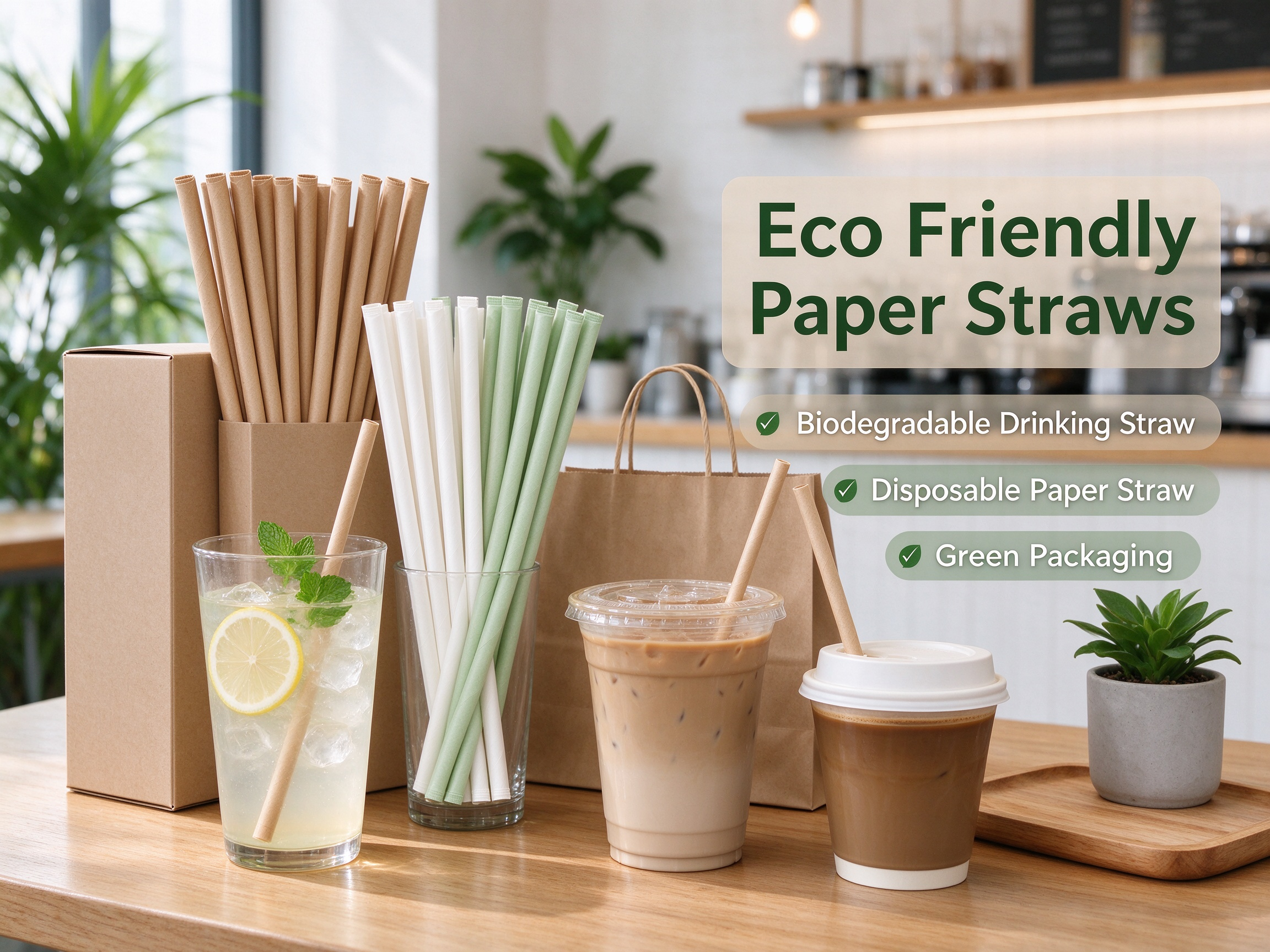
That is why it pays to test Eco Friendly Paper Straws before approving a bulk order. A quick sip from one sample tells you very little about how it will handle different drinks or whether the next production batch will behave the same way. Buyers need a test they can repeat, clear rules for passing or failing, and a supplier who can explain how the straw is made. The checks below are practical screening methods; formal contract or regulatory testing may still need a qualified laboratory.
Decide What Water Resistance Means for Your Use
There isn't one water-resistance target that suits every straw. A straw used for a takeaway drink someone finishes on the way to work has a different job from one left in a large iced tea or a thick smoothie for half an hour.
Before testing, note the drink type, volume, temperature, amount of ice, and expected use time. Test applications separately when customers serve different drinks.
Look at four things during the test:
- Softening: Does the straw lose stiffness as it sits in the liquid?
- Shape: Does the opening stay round, or does the wall flatten or buckle?
- Layer bonding: Do the paper layers stay together, especially around the seam and cut ends?
- Usability: Can someone keep drinking at a normal pace without the straw collapsing or becoming uncomfortable to hold?
These aren't the same failure. A straw may soften a little and remain usable, while another can start peeling even though it still feels firm. Decide what counts as unacceptable before comparing suppliers; otherwise, people may judge the samples differently.
Check How the Straw Is Made
Construction details can explain why samples behave differently. Ask for the exact model specification, including dimensions, paper layers, and bonding method. The same length and color don't make two products equivalent.
Paper layers and wall thickness
Paper straws are commonly made from several layers wound and bonded together. The paper grade, number of layers, wall thickness, and quality of the winding all affect how well the straw holds its shape. A thicker wall can help, but it won't make up for weak bonding or uneven construction.
Record length, diameter, and wall thickness where available. Test each size separately; results from one construction may not apply to another.
Adhesive and seam quality
The adhesive keeps the layers together. If the bond is poor, the seam or drinking end may begin to lift after contact with liquid. Ask the supplier what adhesive is used and request food-contact documents that apply to the finished product and your sales market.
Coatings, inks, and other treatments
Some products use a surface treatment to slow moisture absorption; others rely on the paper and adhesive alone. Ask the supplier to identify any coating or ink and provide the relevant supporting information. Water resistance by itself doesn't prove that a straw is compostable, recyclable, or plastic-free. Those claims need their own evidence.
Start With a Simple Water Immersion Test
An immersion test is handy for screening samples from different factories. It can show softening, swelling, or layers pulling apart, though it doesn't fully mimic the way a person drinks through a straw.
You'll need identical containers, clean water, a timer, a ruler or caliper, and a sheet for recording results. Start with five straws per sample group; use a larger sample plan for high-volume orders or products where a failure would cause serious disruption.
Use the same steps for every supplier:
- Inspect the straws while dry. Note rough edges, uneven seams, visible damage, or openings that are already out of round.
- Record the water temperature and keep it the same across all samples.
- Put each straw into the water to the same depth, leaving a similar section above the surface.
- Check at set intervals, for example 5, 15, and 30 minutes. Add a longer interval if the straw is expected to stay in a drink for longer.
- Note softening, swelling, peeling, or changes to the opening at each check.
- Handle each straw in the same gentle way when assessing usability. Squeezing one harder than another will skew the comparison.
One straw isn't enough to represent a sample group. If some perform well and others fail early, test more pieces and look for possible differences in the seams, dimensions, or visible workmanship. Uneven results are worth raising with the factory, even when the average performance looks acceptable.
These intervals are starting points, not universal standards. Record conditions so the test can be repeated. Full immersion exposes more paper to water than normal use, so follow it with a test in the intended drink. Photos at each interval help teams compare results later.
Try the Straw in the Drinks Your Customers Serve
Plain water gives you a baseline, but it shouldn't be the only test. Temperature, acidity, ingredients, ice, and thickness can all affect how a straw performs. Use the actual beverage where possible, or prepare a consistent substitute and record exactly what went into it.
| Beverage or application | What to observe | Keep consistent |
|---|---|---|
| Iced water | Softening and shape retention | Water temperature, cup, and amount of ice |
| Iced coffee or milk tea | Stiffness, seam condition, and comfort while drinking | Recipe, serving volume, and test duration |
| Fruit juice | Soft spots and layer separation | Juice type and serving temperature |
| Smoothie | Whether the opening stays clear and resists collapse | Thickness and normal suction during use |
| Hot drink, if intended | Heat-related changes and suitability | Supplier temperature limits and relevant safety requirements |
Use the same cup, volume, and temperature for every sample. Add ice if the drink is normally served that way, and inspect at agreed times.
Thirty minutes may be a reasonable starting point for a drink that is usually sipped slowly, but set the target around actual use. Passing a cold-drink test doesn't show that the straw is suitable for hot drinks. Check the supplier's stated temperature limits and the food-contact requirements separately.
Record Results Instead of Relying on Feel
“Seems sturdy” isn't much help when you're comparing three suppliers. Use observations that different people can repeat, and decide in advance what counts as a failure.
Time to noticeable softening. Note when the straw loses enough stiffness to affect normal use. You could define the endpoint as visible buckling during ordinary handling, for example. Whatever definition you choose, use it for every sample.
Changes in shape or diameter. Measure the outside diameter at the same points before and after testing. Check for flattening, swelling, or an opening that has become uneven. Use the same tool and technique; small measurement differences can come from the person doing the check.
Layer separation. Look at the seam and cut ends for lifted edges or gaps. Record this separately from general softening, since the two problems may have different causes.
Normal drinking performance. Check whether the straw remains usable without unusual bending, collapse, or discomfort. For a thick drink, watch whether the opening stays open during normal suction.
An internal rating scale can help people describe what they see:
| Score | Observation | Suggested interpretation |
|---|---|---|
| 5 | Stays firm and usable throughout the test | Meets the agreed criteria |
| 4 | Softens slightly but still works normally | Acceptable if the specification allows it |
| 3 | Noticeable softening or some deformation | Review against the required service time |
| 2 | Significant deformation or partial layer separation | Probably unsuitable for that application |
| 1 | Collapses, separates, or becomes unusable | Reject or investigate the cause |
This scale is for internal comparisons, not a certified standard or proof of compliance. Put the actual acceptance limits in the purchase specification and arrange formal testing when the market or contract requires it.
Compare Suppliers Using the Same Test Conditions
Results only mean something when the samples have been tested in the same way. A straw left in cool water for ten minutes can't fairly be compared with one tested for half an hour in iced coffee.
Use one shared test sheet that records the straw dimensions, beverage, temperature, liquid volume, immersion depth, inspection times, number of samples, and failure criteria. Ask each supplier for samples made to the proposed production specification, not a similar item pulled from a different product line.
Factory test records can help, but ask how the result was obtained. “Lasts 60 minutes” means little without the drink, temperature, and definition of failure.
Keep an approved reference sample for later orders. Label it with the specification and approval date so it doesn't get mixed up with an untested sample. It gives your team something concrete to check if a repeat shipment feels different or starts to fail earlier.
Check That Bulk Production Matches the Sample
A sample that passes doesn't guarantee every straw in a shipment will behave the same way. Paper quality, adhesive application, winding, and drying can vary during production. Agree on approval and inspection steps before placing the order.
- Initial sample: Check dimensions, appearance, construction, and performance under the agreed test.
- Pre-production sample: For custom printing, unusual sizes, or special materials, ask to review a sample made using the planned production process.
- Batch inspection: Agree how samples will be selected and which checks will be repeated before shipment.
- Change control: Ask the factory to notify you if it changes the paper, adhesive, coating, or another feature that may affect water resistance.
The inspection plan should reflect the order size and the cost of a failure. For a custom product, make sure the approved sample includes the actual print, dimensions, and material combination being ordered. A plain stock sample may not represent the finished item.
Agree on what happens if a batch fails inspection, too. Depending on the issue, the next step may be further testing, rework, replacement, or rejection. It's easier to settle those terms before the goods are on their way.
Check Food-Contact Documents and Environmental Claims
Water resistance is only one purchasing consideration. Check food-contact suitability for the destination market and ask for evidence supporting environmental claims.
Make sure the documents refer to the product you're buying. A report for the raw paper may not cover the finished straw once adhesives, inks, or coatings have been added.
Treat compostability, biodegradability, recyclability, and plastic-free statements as separate claims. One does not prove the others. Before using these claims on packaging or product listings, check the supporting evidence and any conditions attached to it.
Turn the Results Into Clear Purchase Requirements
Once a sample is approved, put the requirements in writing. Include the straw model and dimensions, relevant material details, test drink and temperature, test duration, inspection method, and acceptable limits for softening, deformation, and layer separation.
Set targets around actual use. An iced-coffee straw may need to stay usable for a defined period, while a smoothie straw must keep its opening under suction. No single time limit suits every application.
Agree on sample selection, how failed batches will be handled, and whether material or process changes require another approval. Keep the test records with the purchase specification so the quality team can use the same criteria for repeat orders. That way, wholesalers, distributors, and food-service buyers can compare suppliers on actual performance instead of relying on vague promises.