English
 Español
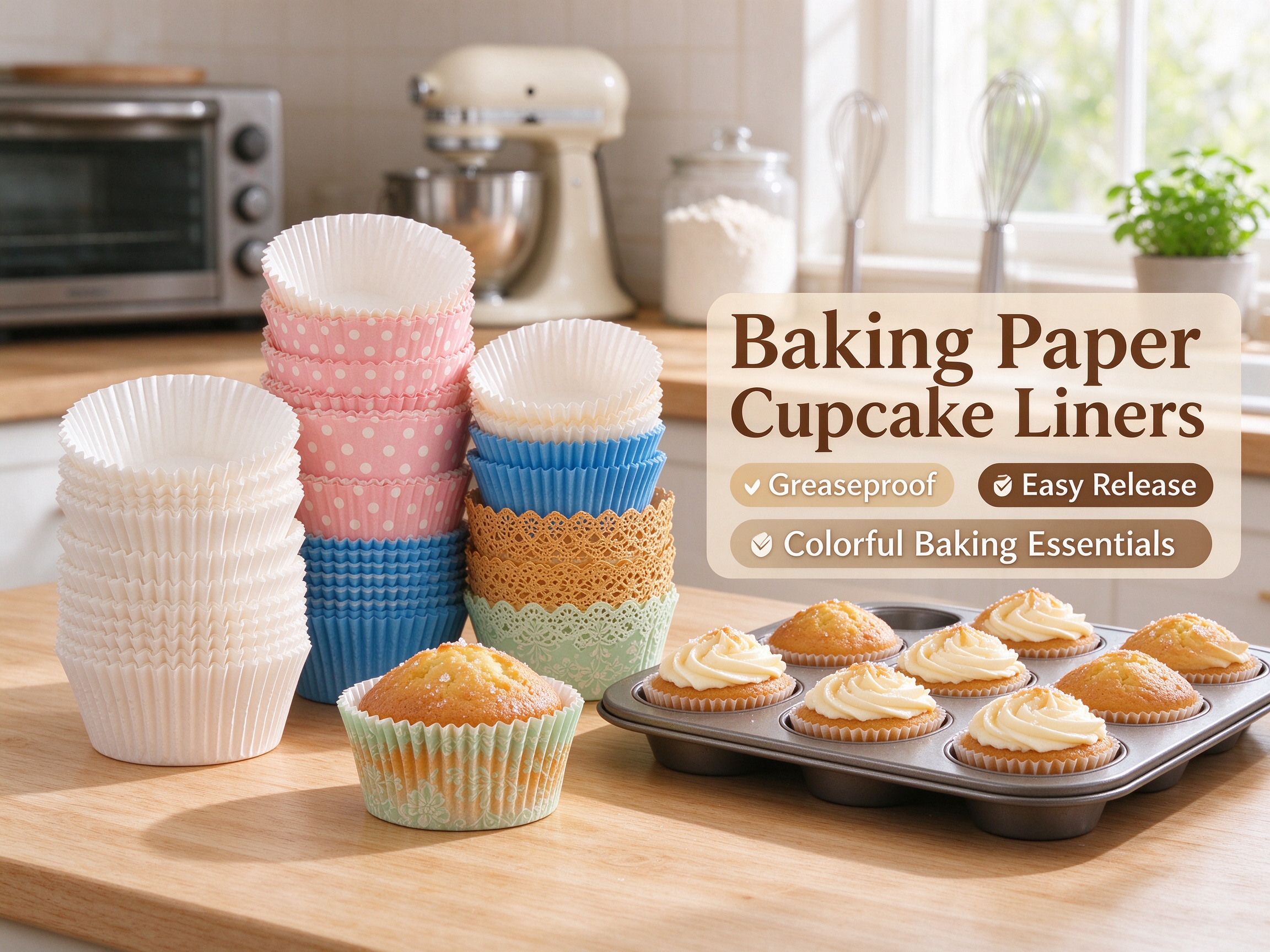
When buying Baking Paper Cupcake Liners, paper weight may seem like a small detail. It isn't. The amount of paper used can affect how a liner feels during filling, how well it holds its shape, and how it behaves when exposed to batter, heat, oil, and moisture.
A liner made from very light paper may be easier to handle and cost less, but it can also feel less stable during filling. Heavier paper gives the liner more body, although that doesn't mean heavier is always the right choice.
Paper grade, coating, stiffness, liner size, baking temperature, and the recipe itself all play a part.
For bakeries, food manufacturers, distributors, and packaging buyers, understanding paper weight makes it easier to compare samples and communicate requirements with a manufacturer. The aim is not to simply select a higher GSM. It is to find a paper construction that works reliably in the actual baking process.
What Does Paper Weight Mean for Baking Paper Cupcake Liners?
Paper weight usually describes how much a certain area of paper weighs. Suppliers commonly use grams per square meter, or GSM, to describe paper weight, although other measurements may be used in different markets.
For cupcake liners, GSM gives buyers a useful reference when comparing materials. But it only tells part of the story.
Two liners can have the same GSM and still perform differently. Paper grade, fiber structure, caliper, porosity, coating, and manufacturing methods can all change how a liner behaves.
For example, a liner with slightly lower GSM may still feel firm if its paper structure is designed for good stiffness. Another liner with higher GSM may not provide the expected performance if other material properties are not suitable.
| Paper characteristic | Possible effect on cupcake liner performance |
|---|---|
| Paper weight | Influences body, handling, and material consumption |
| Caliper | Affects thickness and physical feel |
| Stiffness | Helps the liner maintain its shape |
| Porosity | Influences oil and moisture movement |
| Coating | Can improve release and grease resistance |
| Fiber structure | Affects strength and folding behavior |
| Surface finish | Influences appearance and printing |
So, when comparing Baking Paper Cupcake Liners, it makes sense to look at GSM together with these other specifications.
How Lighter Paper Can Affect Cupcake Liner Handling
Lighter paper uses less material. That can make liners easier to stack, pack, and transport, and it may be suitable for applications where the baking tray provides most of the support.
The issue usually shows up during handling.
In a busy bakery, workers may fill hundreds or thousands of liners every day. The liner needs to open properly and stay in position while batter is being added. If the paper is too flexible, it may fold in on itself or lose its shape.
This can become more noticeable with larger muffin or cupcake sizes.
Lighter paper can also be more affected by oil and moisture if the paper structure or treatment isn't suitable for the recipe.
Still, light paper isn't automatically a problem. A properly selected paper grade, forming process, and coating can make a lighter liner work well.
For commercial production, the sensible approach is to test the actual liner on the filling equipment. A GSM number on a specification sheet cannot tell you everything.
How Heavier Paper Can Improve Liner Stability
Adding paper weight generally gives a liner more physical body. This can make it feel firmer and help it maintain its shape during handling.
That can be useful when liners need to stand open before filling, especially in production environments where they are handled outside the baking tray.
Heavier paper may also be useful for larger cupcake or muffin formats. A large liner has more surface area and may need additional support to stay in shape.
But there is a trade-off.
More paper means greater material consumption, which can affect unit cost and total shipping weight. A heavier structure can also change how the liner folds or behaves during forming.
So the question shouldn't be, “How heavy can we make it?”
A better question is, “What paper weight gives us the required performance without adding material we don't really need?”
Paper Weight and Grease Resistance Are Closely Related but Not the Same
Cupcake batter can contain butter, vegetable oil, eggs, and other ingredients that interact with the paper during baking.
A liner needs to handle that contact without allowing excessive grease to pass through to the outside.
Paper weight can affect how oil and moisture move through the material, but GSM by itself does not determine grease resistance.
Paper treatment matters too.
Some Baking Paper Cupcake Liners use coatings or specially treated paper to improve grease resistance and product release. The choice needs to match the food-contact requirements and the intended baking conditions.
In fact, a heavier untreated paper may perform less effectively than a lighter paper that has been properly designed for the application.
For buyers comparing samples, it is better to ask about both paper weight and grease-resistance performance instead of treating GSM as the only material specification.
How Paper Weight Influences Cupcake Shape and Appearance
The liner is not just there to hold the batter. It also affects how the finished cupcake looks.
When the paper has enough stiffness, the pleats can stay more consistent during filling and baking. That helps produce a more even appearance across a batch.
If the paper is too flexible, the pleats may wrinkle or collapse unevenly after the batter is added. Heat and moisture can make the change more noticeable.
On the other hand, a very rigid paper isn't automatically a better solution. The liner still needs to be formed cleanly. If the material is difficult to fold, it can create problems such as cracking, tearing, or excessive spring-back.
This is especially relevant for printed liners. Uneven folds can affect how a logo or pattern appears after the liner has been formed.
Baking Temperature Can Change the Paper Weight Requirement
Not every bakery product is baked under the same conditions.
A standard cupcake may use a different temperature and baking time from a large muffin, filled cake, or another bakery product. Commercial ovens can also differ in airflow and temperature distribution.
The liner's paper and coating need to remain stable throughout the process.
Paper weight can contribute to physical stability, but thermal performance depends on the paper grade and treatment too. Buyers should give the manufacturer actual production information, including:
- Baking temperature
- Approximate baking time
- Batter type
- Oil or fat content
- Cupcake size
- Baking tray design
- Oven type
This information is much more useful than simply asking for a heavy or light paper.
Moisture Content Also Matters in Commercial Baking
Batter contains water, and that moisture interacts with the liner before and during baking.
A liner that works well with one recipe may behave differently with a batter containing significantly more moisture. Wet conditions can soften paper and reduce stiffness, especially before the cupcake has fully set.
Paper weight can provide additional material structure, but it does not automatically make the liner moisture-resistant.
Fiber characteristics, porosity, surface treatment, and baking conditions all matter.
For commercial buyers, testing with the actual recipe is therefore important. A laboratory specification gives useful information, but production testing tells you what happens when everything is running normally.
Paper Weight Can Affect Printing and Branding
Printed cupcake liners are widely used by bakeries, cafés, hotels, foodservice companies, and packaged-food brands.
Paper weight can affect the physical feel of the liner and its printing surface, although print quality also depends on ink, equipment, surface finish, and color control.
The artwork itself needs some thought too.
Small text, logos, and detailed patterns may look different once the flat paper is folded into pleats. Some parts of the design will sit on curved or folded areas.
For custom printed orders, buyers should inspect a formed sample instead of judging the artwork only on a flat sheet. That's where some design issues become obvious.
How Paper Weight Affects Cost and Shipping
Paper weight has a direct connection with material consumption. If the liner dimensions stay the same, increasing GSM generally means using more paper per piece.
For a small order, the difference may seem insignificant. For hundreds of thousands or millions of liners, it can become a meaningful cost.
The total shipment weight can also change.
When comparing paper specifications, buyers should look at the complete cost picture:
| Buyer consideration | Why it matters |
|---|---|
| Paper GSM | Determines material usage |
| Liner dimensions | Changes paper consumption per piece |
| Case quantity | Affects packing efficiency |
| Total shipment weight | Influences logistics cost |
| Reject rate | Can reduce the benefit of cheaper material |
| Baking performance | Shows whether the specification works in production |
A lower paper cost doesn't help much if the liner causes filling problems, deforms during baking, or increases production waste.
How Buyers Should Compare Different Paper Weights
When comparing different paper weights, use the same recipe and baking process for each sample.
Start with handling. Can workers separate the liners easily? Do they stay open during filling? Do they fit the baking tray properly?
Then check what happens in the oven. Look for changes in shape, grease penetration, moisture movement, sticking, scorching, or deformation.
After baking, examine the finished cupcake and the liner itself. Check the appearance and how easily the liner separates from the product.
It is also worth checking samples after storage, particularly if the packaging will be stored for long periods or exposed to different humidity conditions.
A practical test can include:
- Measuring the paper specification supplied by each manufacturer.
- Running the same recipe in the same baking tray.
- Recording filling and handling problems.
- Comparing liner appearance after baking.
- Checking grease and moisture migration.
- Evaluating release from the baked product.
- Comparing material cost and shipment weight.
- Repeating the test across more than one production batch.
This gives procurement teams a much clearer basis for comparing suppliers.
What B2B Buyers Should Ask a Cupcake Liner Manufacturer
Before placing a bulk order, buyers should give the manufacturer clear information about the application.
Useful details include liner diameter, height, shape, paper color, printing requirements, baking temperature, packaging format, expected quantity, and intended use.
Ask for the paper weight and other relevant material specifications. If food-contact compliance documentation is required in the target market, the manufacturer should be able to provide the appropriate documents for the material being supplied.
Samples are important for custom orders.
A liner may look fine in a catalog but behave differently with a particular batter, oven, or filling process. For repeat orders, it is also worth discussing production consistency so that GSM, dimensions, forming, printing, and paper grade remain within the agreed specifications.
Choosing a Paper Weight That Fits the Actual Application
Paper weight is an important specification when sourcing Baking Paper Cupcake Liners, but it should never be considered on its own.
Lighter paper can work well for applications where the baking tray provides enough support. Heavier paper may be useful when the liner needs more stiffness or a firmer presentation. Neither one is automatically suitable for every recipe or production line.
For B2B buyers, a better way to compare liners is to look at GSM alongside caliper, stiffness, grease resistance, coating, printing performance, liner dimensions, and actual baking results.
In the end, the right paper weight is the one that works on the production floor. It should handle filling, baking, and packing consistently, fit the product requirements, and make sense for the expected order volume. That is what turns a paper-weight specification from just a number on a datasheet into a useful part of the liner design.